Concrete Patio Installation Simcoe: A Hands-On Guide for Norfolk County Homeowners
If you are planning a concrete patio installation Simcoe homeowners often ask me what sets a lasting patio apart from one that cracks within two winters. I have spent years working with concrete in Norfolk County, and I can tell you the difference comes down to preparation, mix design, and knowing the local ground. A concrete patio is a serious investment in your property, and getting it right means understanding the soil, the weather, and the craftspeople you hire.
Norfolk County sits on a mix of clay, sand, and gravel left by ancient glaciers. That variety matters because a concrete patio installation Simcoe and the surrounding area has to account for frost heave. The ground freezes deep here, sometimes three to four feet down. If you pour a slab on unprepared soil, winter will push it up unevenly, and come spring you will have cracks that invite weeds and water. A proper gravel base is not optional. It is the backbone of a patio that stays flat for decades.
Start with the Ground
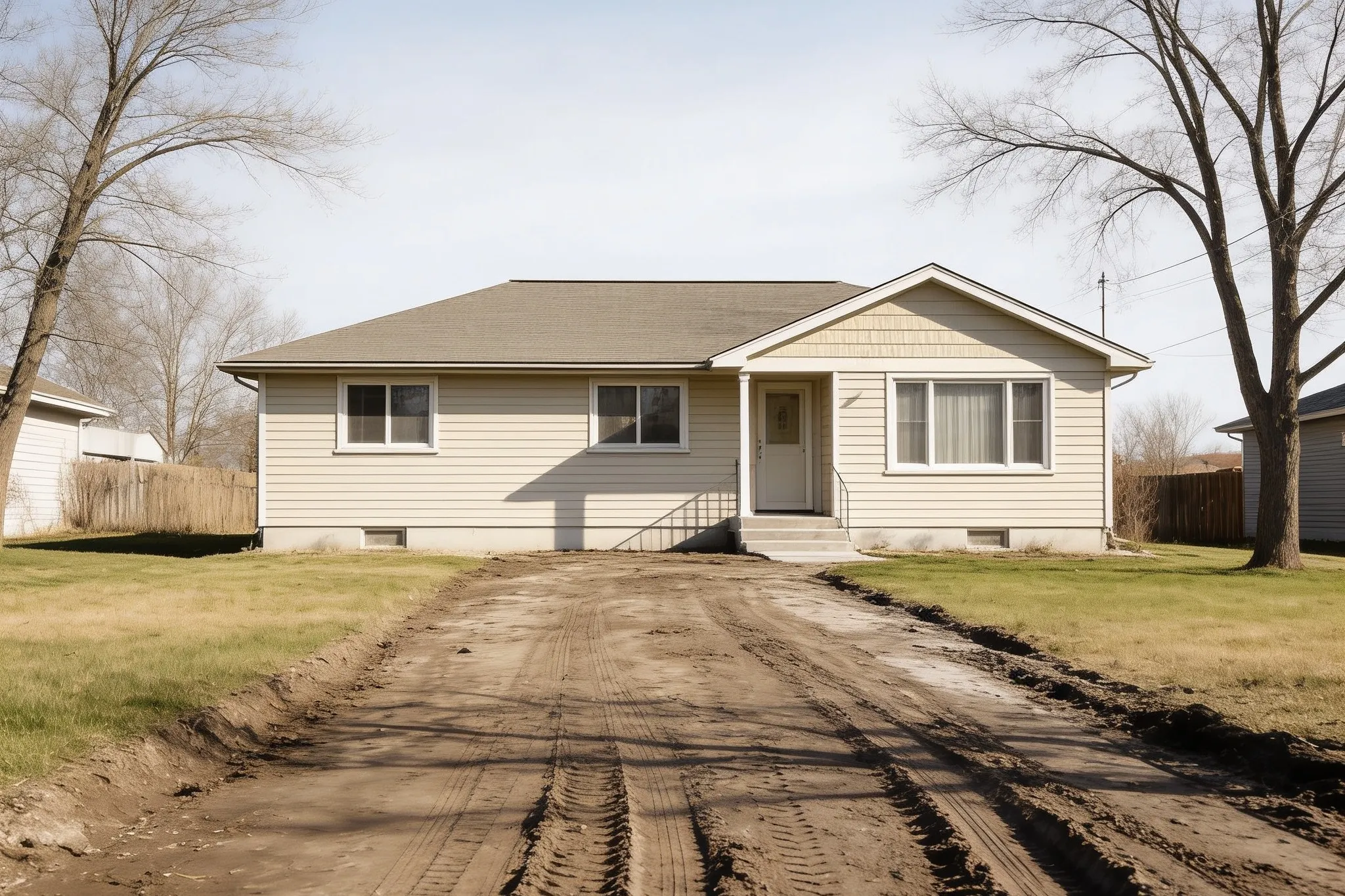
Every good patio begins with excavation. I have seen contractors skip this step or do it too shallow, and the results are always the same. You need to remove at least six to eight inches of topsoil and organic material. Then you compact the subgrade and bring in a washed gravel base. That gravel allows water to drain away from the concrete, which stops freeze-thaw cycles from lifting the slab. In Simcoe, where the water table can be high after spring melt, drainage is everything.
I always tell homeowners to ask their contractor about the gravel base before they sign anything. Some crews will try to save money by using crushed stone or even sand, but clean gravel with angular edges locks together under compaction. It does not shift. That stability carries through to the finished concrete patio.
Mix and Reinforcement
The concrete mix itself matters as much as the base. For a residential patio in Ontario, you want a mix with a low water-to-cement ratio and proper air entrainment. Air entrainment means tiny bubbles are added to the concrete to give it room to expand when water freezes inside the pores. Without it, the surface will spall and flake after a few winters. A good ready-mix supplier in Norfolk County will know the local specs and can deliver a mix designed for our freeze-thaw cycles.
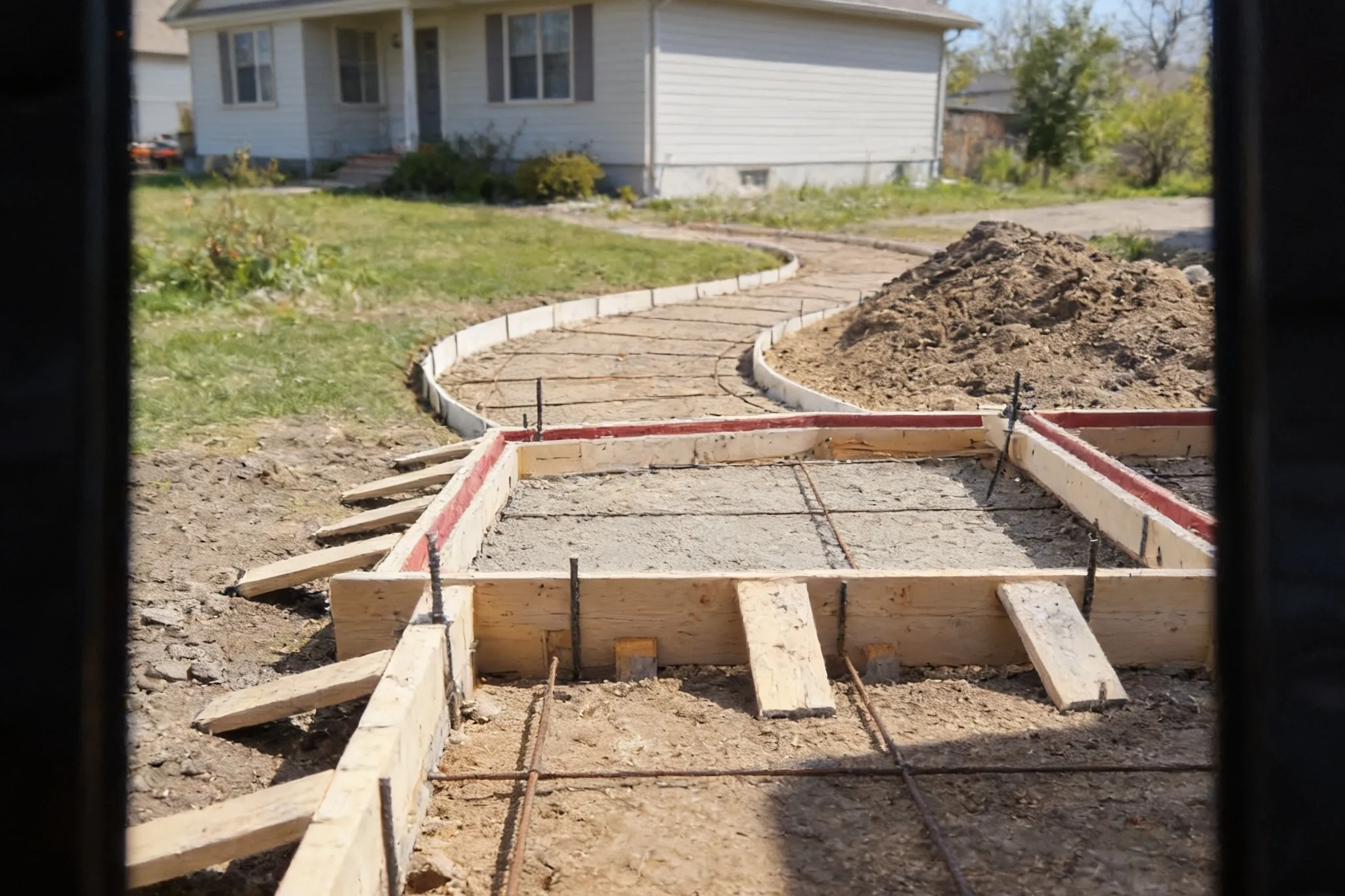
Reinforcement is another point where I see shortcuts. Some contractors use wire mesh, which can end up on the bottom of the slab if the crew steps on it during the pour. I prefer rebar for patio work. A grid of rebar tied at sixteen inches on centre gives the concrete tensile strength that prevents large cracks from opening. The rebar needs to be lifted off the gravel base by at least two inches so it sits in the middle of the slab, not on the bottom where it does no good.
Control Joints and Finishing
Concrete wants to crack. That is just physics. As it cures and dries, it shrinks, and the ground below it moves with moisture changes. Instead of fighting that, we guide the cracks with control joints. These are saw cuts or tooled grooves placed every eight to ten feet in both directions. They create a weak line where the concrete can crack neatly, hidden inside the joint. A patio without control joints will crack wherever the stress finds a weak spot, usually in a jagged line across the middle.
The finish you choose affects both appearance and maintenance. A broom finish is classic and practical. It gives traction when the concrete is wet, which matters in Simcoe where we get rain and snow. Stamped concrete can mimic stone or brick, and it adds a decorative look that many homeowners love. But stamped concrete requires a sealer to protect the colour and texture from the sun and salt. If you go that route, plan to reseal every two or three years.
I have installed both broom-finished and stamped patios in Norfolk County, and each has its place. A broom finish is faster, costs less, and needs almost no maintenance beyond cleaning. Stamped concrete costs more up front and needs a sealed surface to keep its looks, but it can raise the value of a home if done well. Either way, the sealer is important. A sealed surface resists stains from barbecue grease, mud, and bird droppings, and it makes winter cleanup easier.
Hiring Contractors in Norfolk County
When you search for concrete patio installation Simcoe you will find plenty of contractors offering deals. Price matters, but I have learned that the cheapest quote often costs the most in the long run. Look for a crew that is union-certified. That certification means the workers have ongoing training in safety, mix design, and finishing techniques. It also means the company carries proper insurance and follows building codes.
Free quotes are standard in this area, and a good contractor will spend time walking your yard, looking at drainage, and asking about your plans. They should explain their gravel base depth, their rebar spacing, and how they will handle control joints. If a contractor gives you a quote over the phone without seeing the site, that is a red flag. Ground conditions vary from one street to the next in Norfolk County. A patio on sandy loam near Lake Erie needs different prep than one on heavy clay in downtown Simcoe.
I also recommend asking about their approach to concrete maintenance and winter preparation. A patio that is properly sealed and has good drainage will survive a Norfolk County winter with little trouble. But if the sealer is worn or the grade slopes toward the house, you will deal with ice, water pooling, and eventual cracking. A honest contractor will tell you what to watch for and how to care for the patio after it is installed.
Long-Term Care
Once your concrete patio is in, a little maintenance goes a long way. Sweep off dirt and debris regularly. In fall, keep leaves off the surface because wet leaves can stain and hold moisture against the concrete. In winter, use a plastic shovel to clear snow, not a metal blade that can gouge the surface. Avoid de-icing salts that contain ammonium nitrate or ammonium sulphate; they attack the concrete. Calcium chloride or sand are safer choices.
I tell my clients to inspect the sealed surface every spring. If water beads up and rolls off, the sealer is still working. If the water soaks in and darkens the concrete, it is time to reseal. That job is straightforward: clean the patio thoroughly with a concrete cleaner, let it dry, and roll on a new coat of sealer. It takes a weekend and adds years to the patio's life.
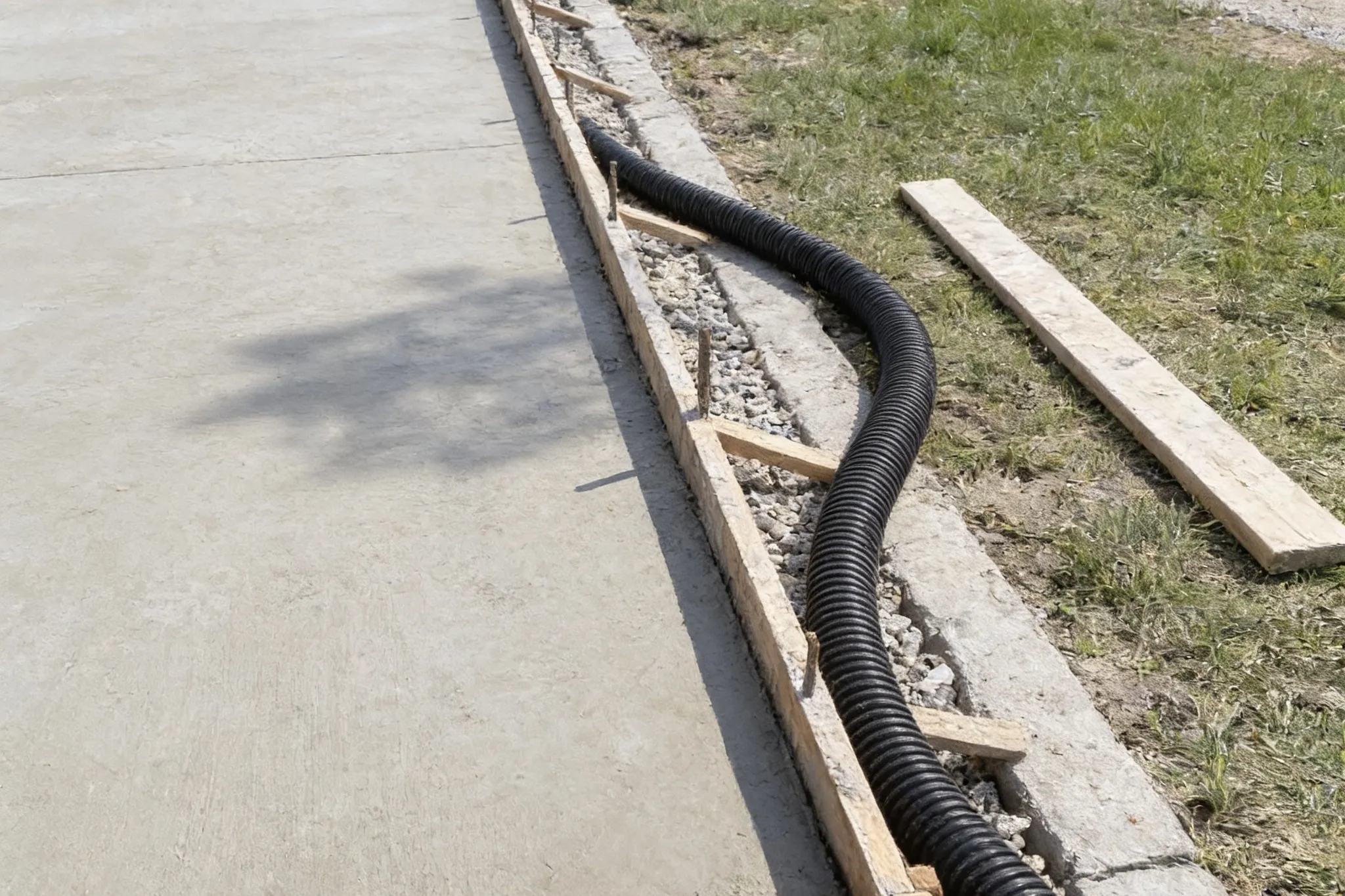
If you already have a concrete driveway or foundation on your property, the same principles apply. Repairs to a concrete patio often involve patching cracks or resetting sunken sections. Small hairline cracks can be filled with a polyurethane caulk designed for concrete. Larger issues may need a partial replacement or mudjacking. A union-certified crew will know how to match the new concrete to the old so the repair blends in.
I have seen too many homeowners rush into a patio project without thinking about the long term. They pick a colour from a brochure and a price from a flyer, and they end up with a slab that cracks, stains, or heaves within three years. A thoughtful concrete patio installation Simcoe starts with understanding the ground, choosing the right mix and reinforcement, and hiring people who take pride in their work. That approach gives you a patio that looks good, works hard, and lasts through every season Norfolk County throws at it.